DIANREZHANConveyor ovens specialist中文

CONTINUOUS PROCESS HEATING

Continuous heating,matched to the line.

Compare wire-mesh, flat-belt and roller arrangements using product support, throughput, residence time and available space.

03
Equipment types
06
Selection inputs
∞
Process fit
3D structure explorerConveyor oven
Loading the 3D preview…

Drag to rotate · Typical structure; final configuration follows the product specification

PRODUCT MATRIX

Three designs,
for different transport needs

Compare equipment around product size, load and process conditions.
01
Wire-mesh conveyor ovens
WIRE-MESH CONVEYOR

01 / CONTINUOUS HEATING

Wire-mesh conveyor ovens

A metal mesh belt carries the load continuously. Check part size, mesh openings, load support and airflow needs before setting belt width and spacing.
  • Match mesh openings to product support needs
  • Check speed against pitch and throughput
  • Confirm belt temperature and exhaust conditions
Metal mesh beltMesh opening and load checks
02
Flat-belt conveyor ovens
FLAT-BELT CONVEYOR

02 / CONTINUOUS HEATING

Flat-belt conveyor ovens

A continuous flat belt supports the product. Confirm belt material suitability, process temperature, contact requirements, tracking and cleaning access.
  • Check product contact and belt material
  • Confirm temperature limits and cleaning access
  • Size the heated length for residence time
Continuous flat supportBelt material and temperature
03
Roller conveyor ovens
ROLLER CONVEYOR

03 / CONTINUOUS HEATING

Roller conveyor ovens

Rollers carry rigid parts or trays through the line. Check the underside, roller pitch, supported length, load and upstream and downstream transfer.
  • Check the product base and roller pitch
  • Confirm product mass and transfer cycle
  • Allow for upstream, downstream and service access
Rigid parts / traysRoller pitch and support

STRUCTURE COMPARISON

Compare how the product is supported

A mesh belt, flat belt and roller bed have different support and cleaning requirements. Confirm the product base, carrier and process substances before choosing the transport system.

Swipe the table sideways on smaller screens.

TransportProduct/support conditionsChecksSelection limits
Wire meshParts or trays that suit mesh support and through-flowMesh opening, load, tracking, cleaning and contact marksCheck trays for small or soft parts and possible surface marking
Flat beltParts or carriers needing continuous supportBelt temperature rating, chemical compatibility, splice and cleaningConfirm actual belt-contact temperature and process substances, not just chamber setpoint
RollersFlat-bottom parts or trays that can span the roller pitchPitch, load, synchronization and transfersSmall or flexible parts may need carriers; outside dimensions alone are insufficient

CONTROL & PROTECTION

Coordinate conveying, ventilation and heat

A continuous line needs a defined response for products already inside the heated section as well as upstream and downstream equipment.
01

Conveyor fault response

Define speed feedback, blockage or drive-fault detection, heat inhibition on a stop, and handling of products remaining in the hot zone.

02

Circulation and exhaust

Check their permissives separately. A command to run a fan is not proof of airflow. Solvent release needs its own assessment.

03

Zone temperature protection

Review zone sensors, independent high-limit cut-offs and alarm records. Define air temperature, product temperature and protective limits separately.

04

Emergency and line interlocks

Specify responses to emergency stop, power loss and downstream stops, including recovery conditions. Fan, conveyor and heater sequences depend on the equipment design.

SELECTION LOGIC

Connect throughput, time and floor space

  1. 01

    Parts and carriers

    Part dimensions, mass, underside and tray or fixture details determine support and clearance requirements.

  2. 02

    Hourly throughput

    Specify parts or mass per hour, lane count, product spacing and upstream and downstream cycle times.

  3. 03

    Temperature and process time

    Separate air setpoints from required part temperatures. State the criteria for heat-up, soak, drying or curing.

  4. 04

    Speed and heated length

    Residence time = heated path length ÷ conveyor speed. This is travel time through the heated path, not necessarily soak time after the part reaches temperature.

  5. 05

    Zones and exhaust

    Review heating zones, circulation, moisture and volatile release against the process. Appearance alone does not establish the heating method or hazardous-process suitability.

  6. 06

    Installation and transfers

    Confirm loading height, total footprint, utilities, cooling sections, service clearance and interfaces to adjacent equipment.

EQUIPMENT IN APPLICATION

Equipment in process,
site references

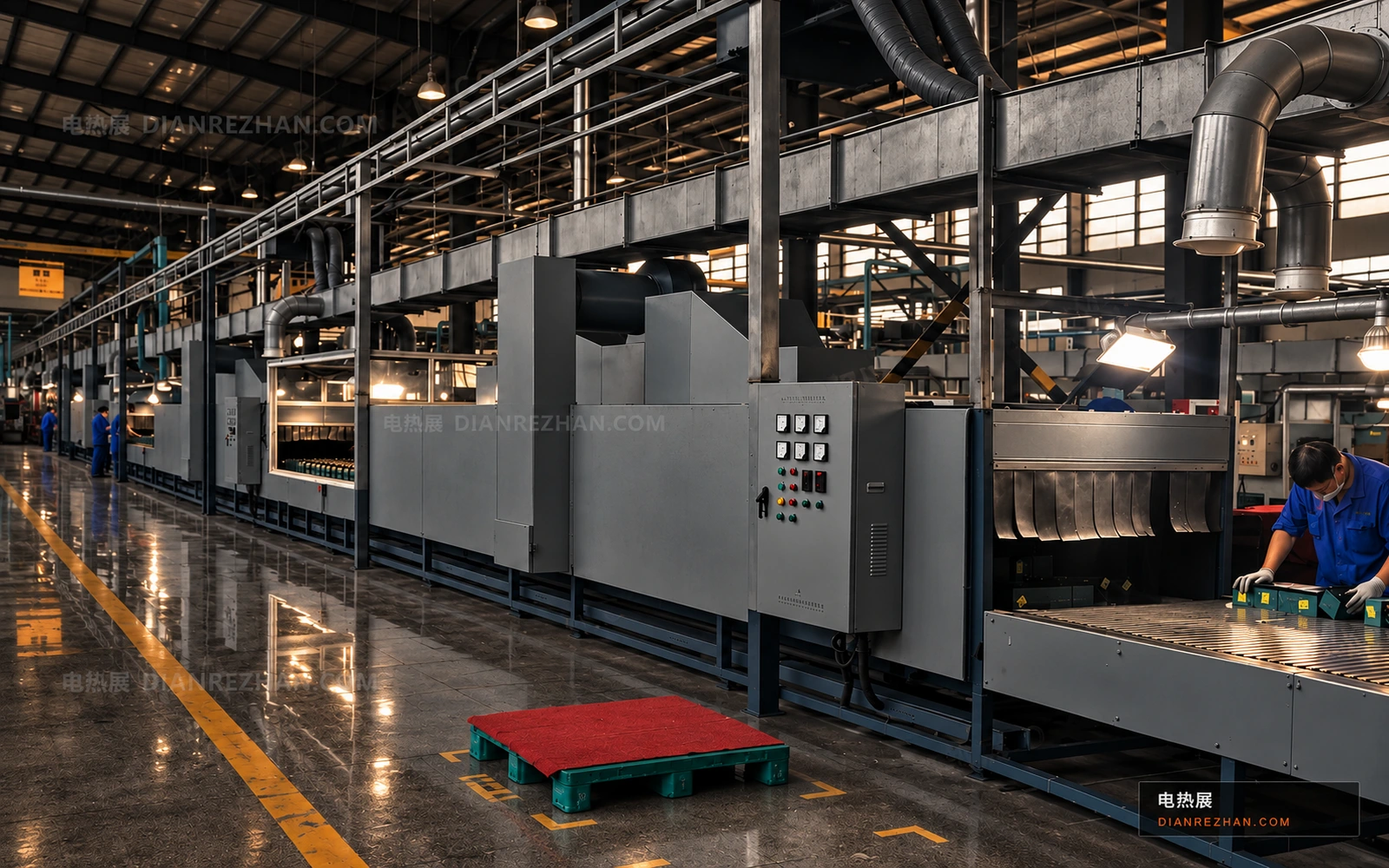
Chain-plate drying line
01

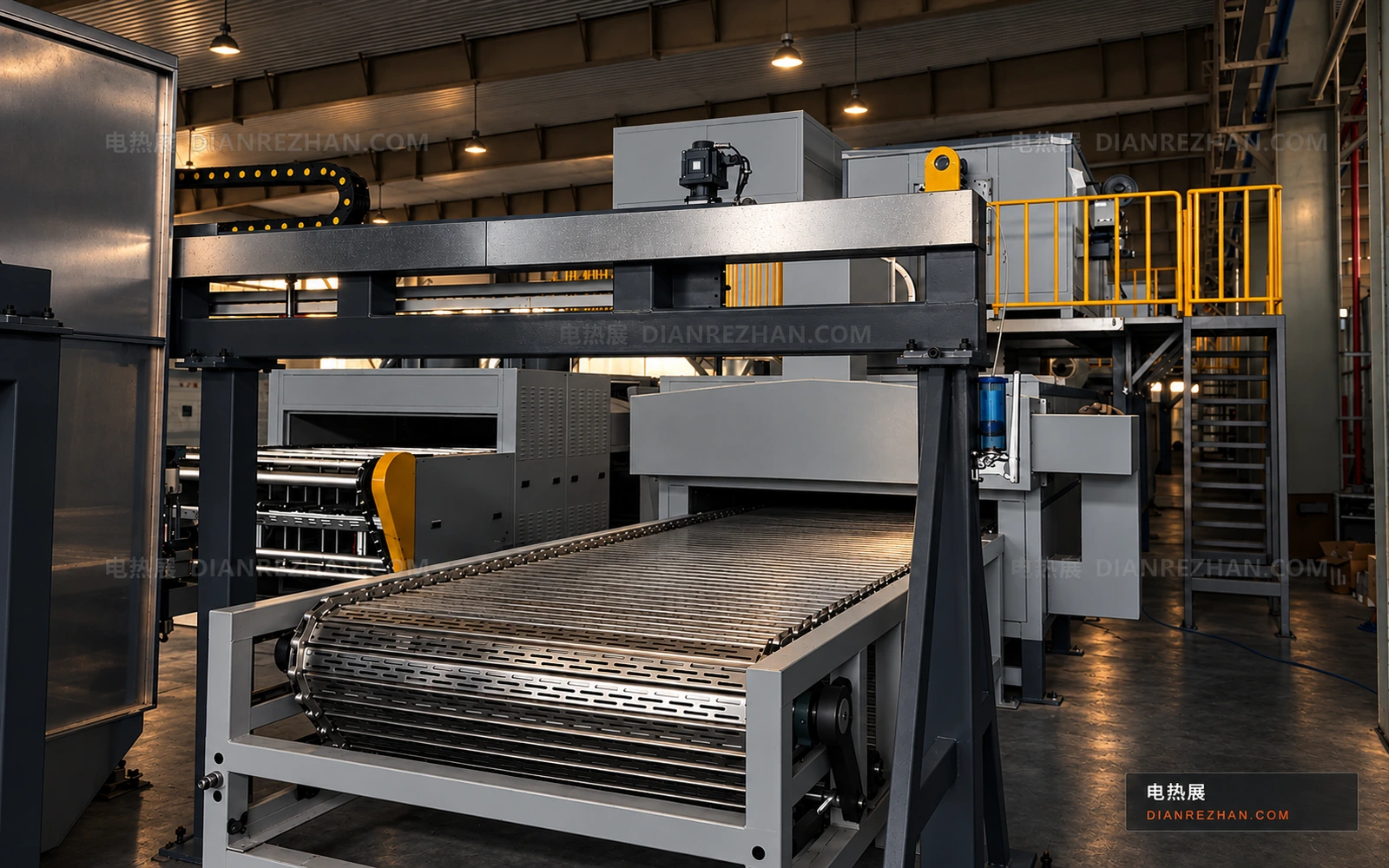
Chain-plate drying line

A chain-plate conveyor integrated with continuous drying equipment. Check load support, exhaust and production cycle.

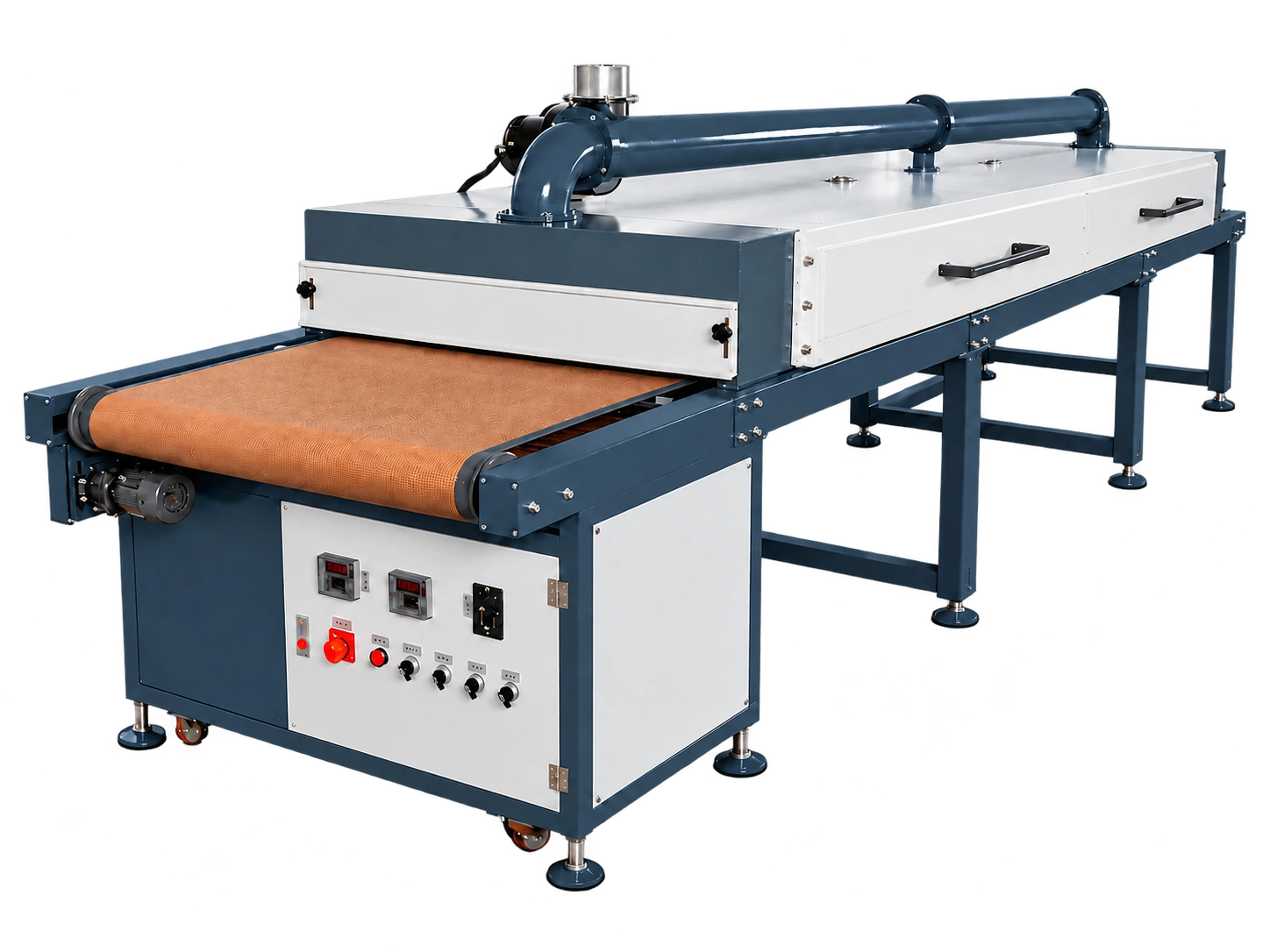
Wire-mesh conveyor equipment
02

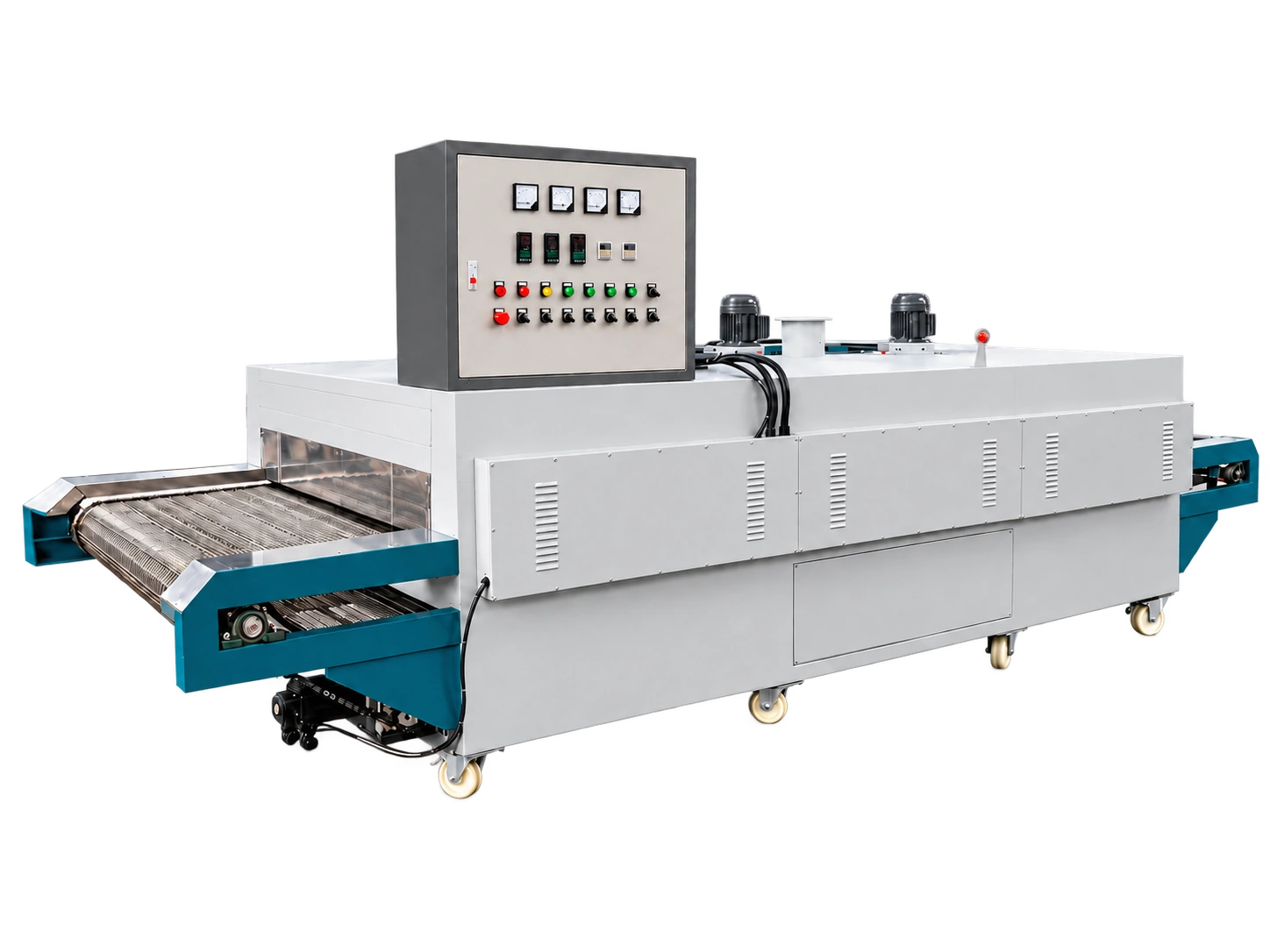
Wire-mesh conveyor equipment

The mesh belt, heated enclosure and control panel arrangement. Check mesh openings, product size and belt width.

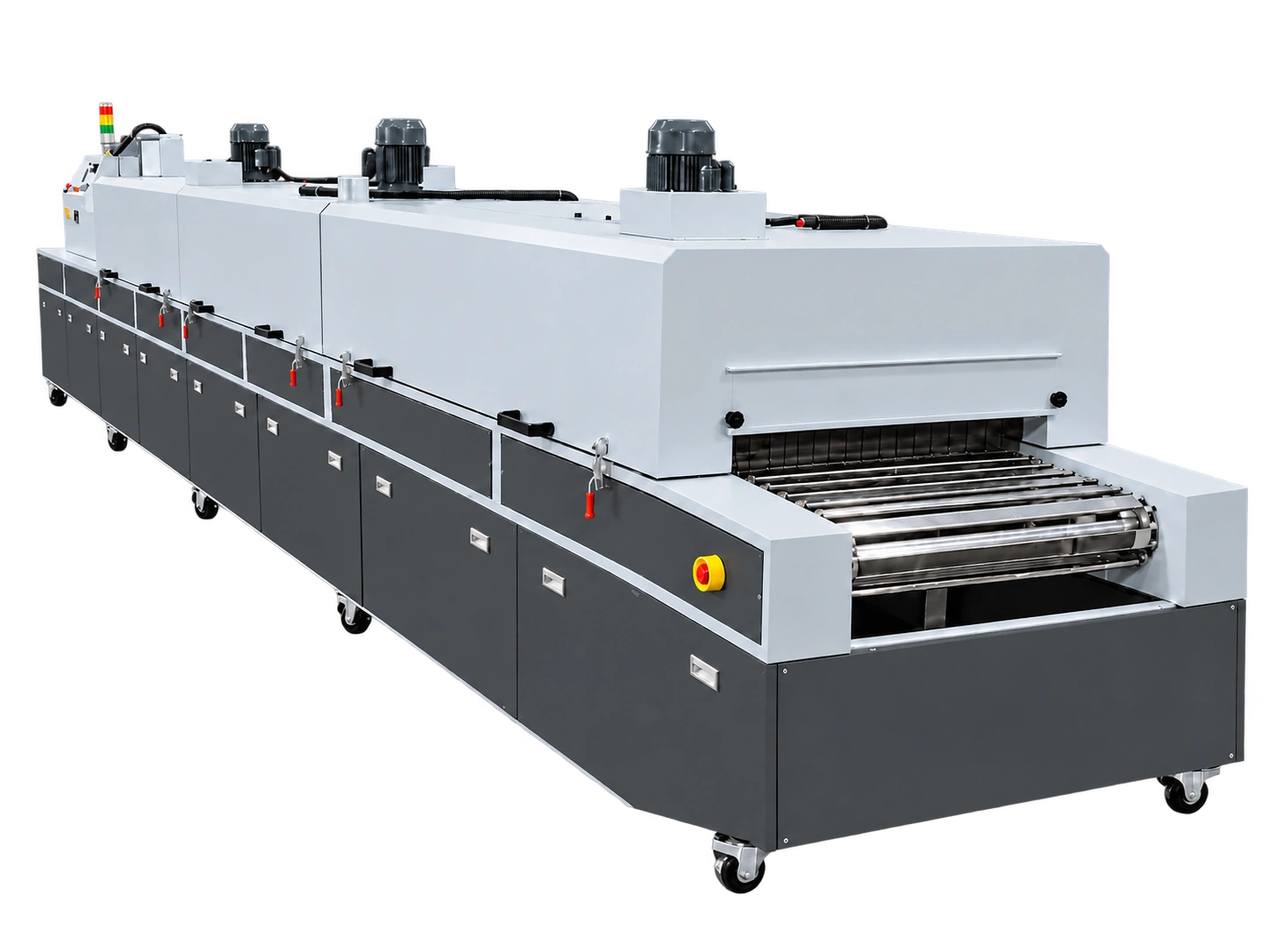
Flat-belt processing line
03

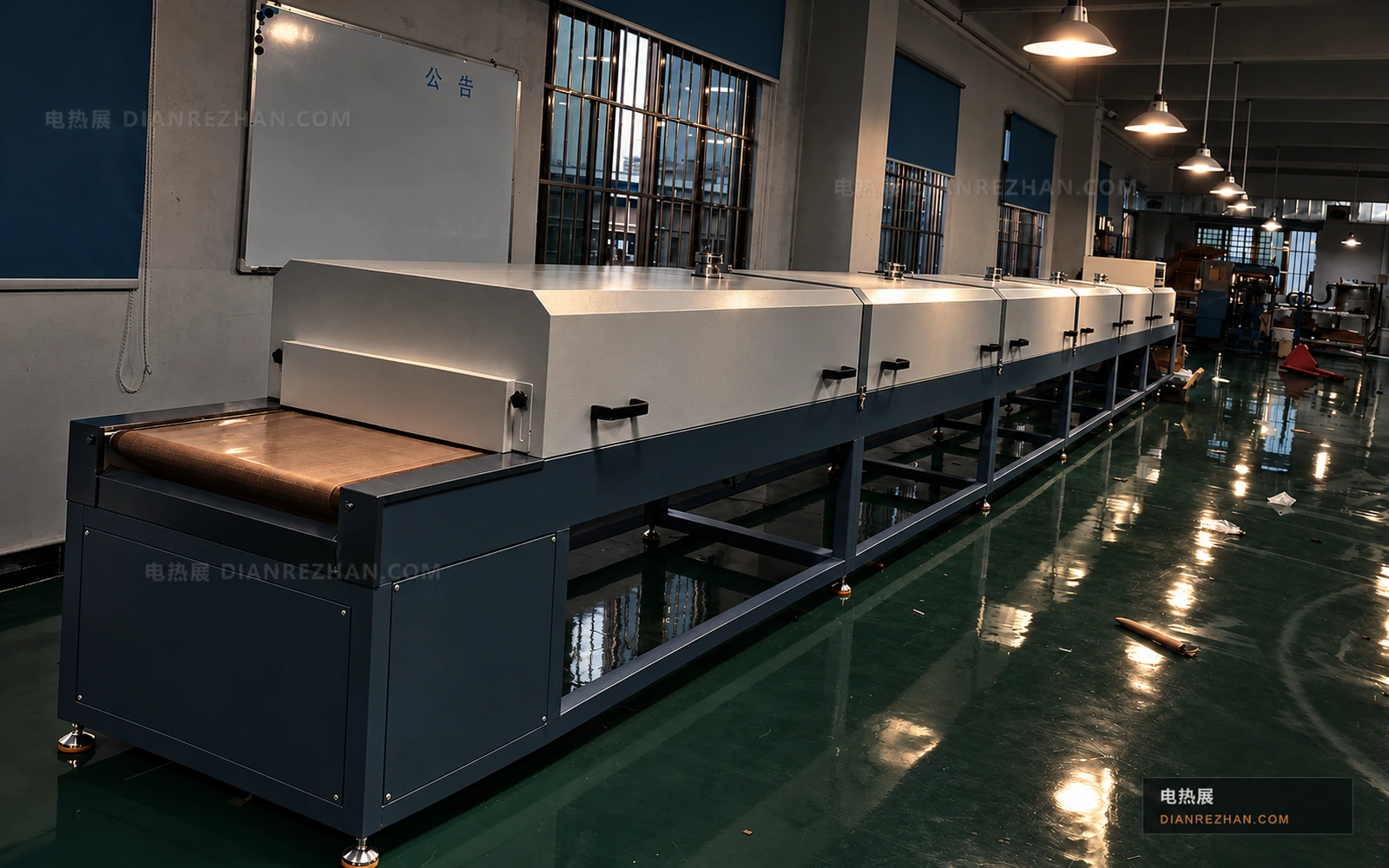
Flat-belt processing line

A continuous flat belt and segmented enclosure, specified around process time, belt material and effective heated length.

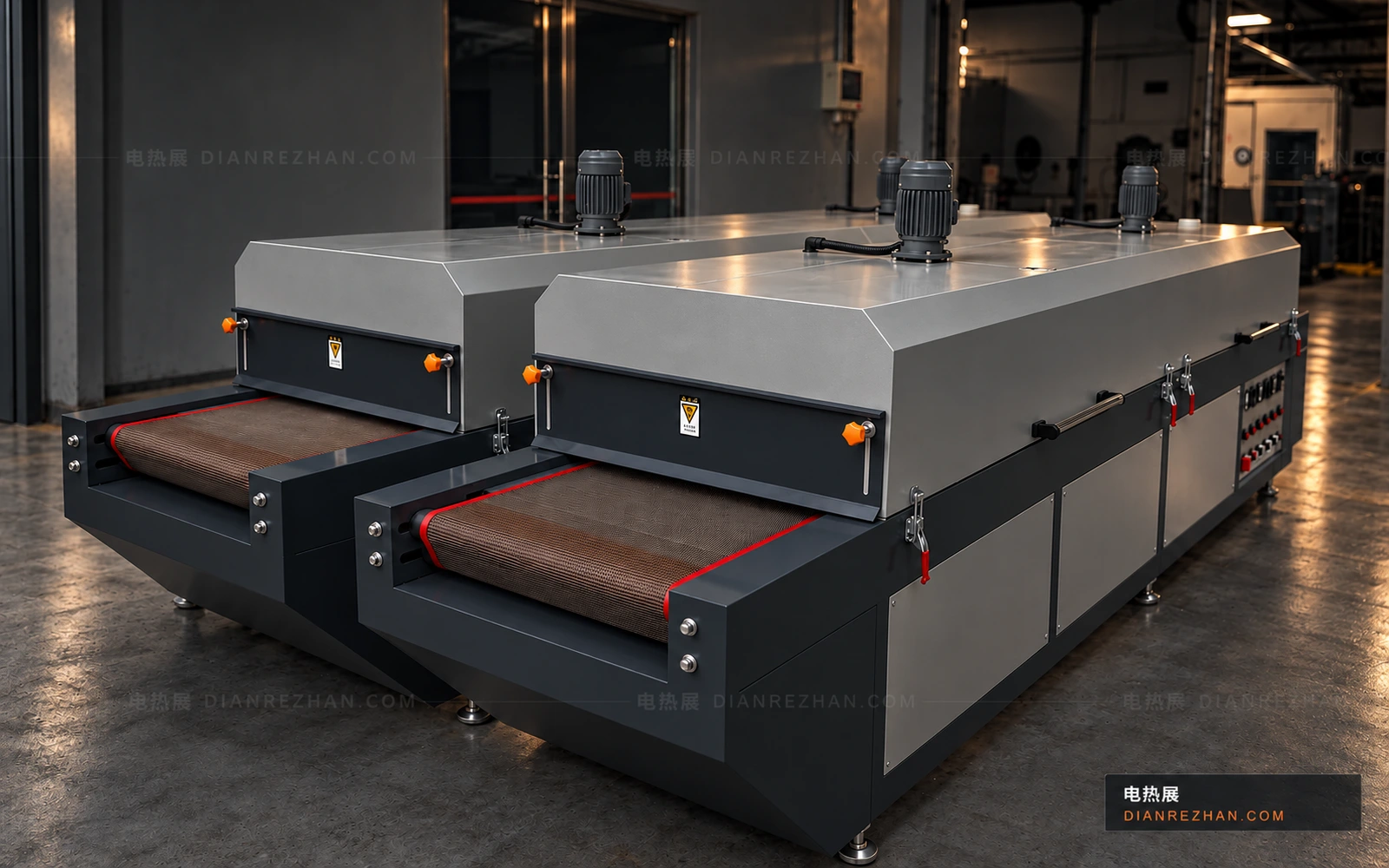
Roller transport and transfer
04

Roller transport and transfer

Roller support and adjacent transfer stations. Check the product base, mass and support pitch.

Site references with edited paint colors and presentation. Final equipment configuration follows the agreed specification.

03 / PROCESS SEQUENCE

Define the continuous process

  1. 01

    Load and convey

    Set product spacing, lane count and carrier arrangement for stable loading.

  2. 02

    Preheat and heat up

    Arrange the heating sections around the required part temperature profile.

  3. 03

    Process

    Validate drying, curing or soak requirements against line speed and heated path.

  4. 04

    Discharge and cool

    Match cooling, unloading and the next operation to the product temperature limit.

TECHNICAL PARAMETERS

Selection parameters at a glance

Product and loadingMaterial, dimensions, mass, fixtures and loading pattern
Temperature and timeInitial and target product temperature, heat-up and soak time
Capacity and cycleHourly throughput, pitch, line speed and effective heated length
Airflow and exhaustRecirculation, exhaust, moisture or volatile release and protective measures
Site conditionsAvailable power, footprint, loading access and service clearances

These are specification inputs, not universal product ratings. Installed power also needs to cover enclosure heat-up, exhaust and thermal losses.

Check conveyor timing

Convert speed, residence time and heated travel length before discussing the layout.

Open process calculator →

KNOWLEDGE BASE

Frequently asked questions

01How do I choose between mesh, flat-belt and roller conveyors?+

Start with stable product support, temperature and contact requirements. Check mesh openings against part size, flat-belt material against the process, and roller pitch against the product underside. Slat, chain and dedicated-carrier arrangements can also be reviewed for other loads.

02Can I increase throughput by increasing conveyor speed?+

A higher speed reduces residence time in a fixed heated path. Validate the part temperature profile and process result before changing speed, while also checking product spacing, lane count and adjacent line capacity.

03Is heated length the same as overall oven length?+

No. The installed length may also include loading and discharge extensions, transitions, cooling and drive sections. Specify the heated path separately from the overall installation footprint.

04Does reaching the oven setpoint mean the product is ready?+

Not necessarily. Use the required part temperature, moisture level, cure result or other acceptance criterion. Air temperature and residence time are process inputs, not substitutes for product acceptance.
PRACTICAL GUIDES

Before you specify the equipment

Choose a guide for the process information you need to confirm.

YOUR PROCESS

Bring the conveyor process data together

Start with the product, temperature and time. Other inputs can be confirmed later.

Enter and submit your requirements ↗